A mysterious signal around Earth could be dark matterhttps://www.sciencedaily.com/releases/2026/09/260904000328.htm

Scientists used Earth’s magnetic field and atmosphere as a planet-sized detector to search for some of the lightest proposed forms of dark matter. The approach dramatically improved limits on ultralight axions and uncovered several intriguing dark photon signals that still need to be explained.

80,000-year-old β€œarrowheads” rewrite human historyhttps://www.sciencedaily.com/releases/2026/09/260903064233.htm

Archaeologists have identified tiny 80,000-year-old projectile points in Uzbekistan that may have been used like arrowheads. Their size, design, and impact damage closely resemble weapons found much later at a Homo sapiens site in France. The discovery suggests sophisticated projectile technology may have appeared in Central Asia long before modern humans became firmly established in Europe, potentially rewriting a major chapter of human migration.

Heart disease and kidney disease can fuel each other. New guidelines aim to break the cyclehttps://www.sciencedaily.com/releases/2026/09/260902234447.htm

Heart disease and chronic kidney disease can accelerate one another, but new guidelines say simple screening and early treatment could substantially reduce the risks. Blood and urine tests, combined with proven heart and kidney therapies, may help catch problems sooner and prevent serious complications.

This β€œnew” frog was hiding in plain sight for 100 yearshttps://www.sciencedaily.com/releases/2026/09/260902234505.htm

A common frog found across Ecuador and Colombia has finally been recognized as its own species after more than a century of mistaken identity. Museum specimens from the 1800s helped scientists reveal that Pristimantis milpe had been hiding in plain sight all along.

Some joints may be primed for rheumatoid arthritis before birthhttps://www.sciencedaily.com/releases/2026/09/260901070538.htm

Scientists have found evidence that vulnerability to rheumatoid arthritis may begin before birth. Finger joints commonly affected by the disease develop with different tissue structures and larger populations of specialized fibroblasts than joints that are usually spared. Those cells also respond differently to inflammation, suggesting that the architecture of each joint may help determine where arthritis eventually takes hold.

Compound in blueberries may help muscle cells burn excess fathttps://www.sciencedaily.com/releases/2026/09/260903064219.htm

Scientists in Japan have identified a natural compound found in blueberries, grapes, and other berries that may help muscle cells burn excess fat instead of storing it. The compound, pterostilbene, reduced abnormal fat buildup in cultured mouse muscle cells by boosting fat breakdown and helping stabilize a key protein involved in fatty acid metabolism.

Life uses 4 DNA letters. Scientists just made 8 workhttps://www.sciencedaily.com/releases/2026/09/260904000310.htm

Researchers at UC San Diego have demonstrated that a key cellular enzyme can accurately read an eight-letter genetic alphabet, doubling the four letters used by all known life on Earth. Detailed imaging revealed that RNA polymerase handles synthetic DNA letters in surprisingly similar ways to natural ones. The finding brings scientists closer to building expanded genetic systems that could perform entirely new biological functions.

Quantum oscillations defy expectations in this exotic materialhttps://www.sciencedaily.com/releases/2026/09/260901010715.htm

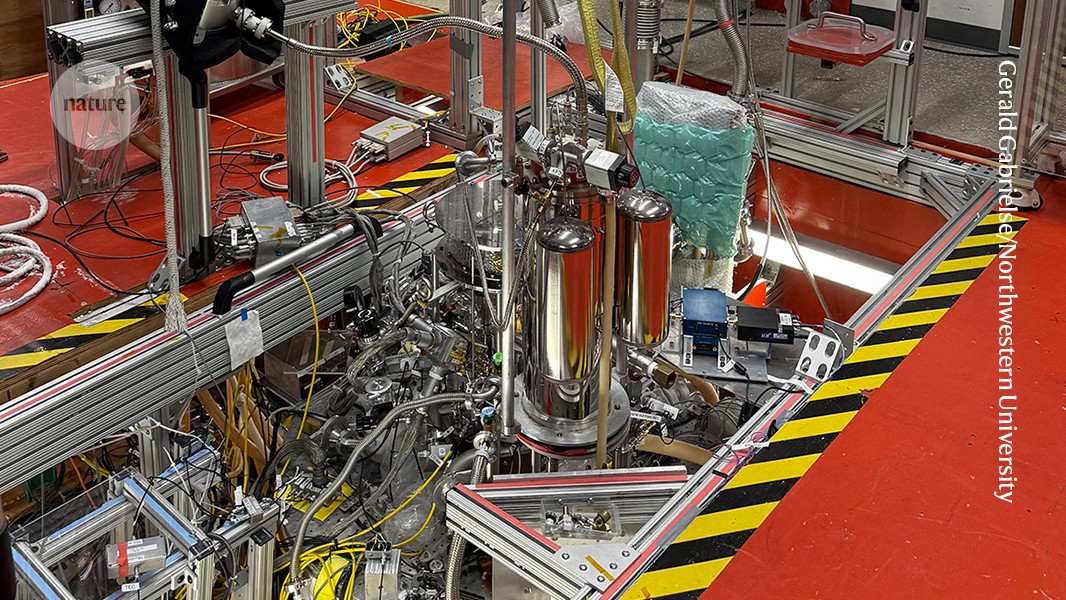
Scientists have uncovered an unusual form of electron behavior in zirconium pentatelluride, a quantum material that can act as both an insulator and a conductor. Under temperatures near absolute zero and magnetic fields reaching 60 tesla, electrons produced quantum oscillations that continued even after conventional physics predicted they should disappear.

Scientists overturn a theory about this shark’s strange headhttps://www.sciencedaily.com/releases/2026/09/260902234508.htm

Scientists have overturned a leading explanation for why male and female bonnethead sharks have differently shaped heads. Instead of males developing a pointed snout at maturity, both sexes actually begin with more pointed heads that become rounder with age, particularly in females.

Harvard scientists turn knitting into shape-shifting smart fabrichttps://www.sciencedaily.com/releases/2026/09/260901070543.htm

Harvard researchers have transformed ordinary knitting into a platform for creating fabrics that can snap between different shapes and perform useful functions. Using elastic yarns and industrial knitting techniques, the team engineered thick textiles that naturally curve and lock into multiple stable configurations, much like a light switch flipping between on and off. By adding conductive yarn, they turned these shape-shifting fabrics into soft electronic switches capable of controlling lights, counting steps, and responding to movement.

0trust.social media

Loading your media...

Pick a GIF β€” Giphy

Loading GIFs...